
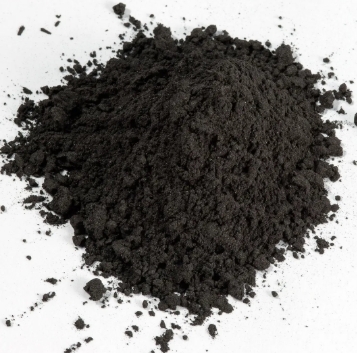
The uses of high-purity graphite: Graphite powder. Why is graphite powder so popular? The domestic market for graphite heaters is expected to be promising. Why are graphite heaters becoming increasingly popular among people? In fact, the reason why it is becoming increasingly popular among people is inseparable from its advantages. Now, let’s take a look at the specific advantages of the graphite heater together!
1. It completely eliminates the oxidation and decarburization on the workpiece surface during the heating process, and can obtain a clean surface without a deteriorated layer. This is of great significance to the improvement of cutting performance for those tools that only grind one side during grinding (such as twist drills where the decarburization layer on the groove surface is directly exposed to the cutting edge after grinding).
2. It causes no pollution to the environment and does not require the treatment of the three wastes.
3. It has a high degree of mechatronics. Based on the improvement of temperature measurement and control accuracy, the movement of workpieces, air pressure adjustment, power adjustment, etc. can all be pre-programmed and set, and quenching and tempering can be carried out step by step.
4. The energy consumption is significantly lower than that of salt bath furnaces. The modern advanced graphite heater heating chamber is equipped with insulation walls and barriers made of high-quality insulation materials, which can highly concentrate the electric heating energy inside the heating chamber, achieving remarkable energy-saving effects.
5. The accuracy of furnace temperature measurement and monitoring has been significantly improved. The indication value of the thermocouple reaches ± the furnace temperature 1.5°c. However, the temperature difference between different parts of a large number of workpieces in the furnace is relatively large. If forced circulation of rarefied gas is adopted, the temperature difference can still be controlled within ±5°c.
Degassing is the phenomenon of slow evaporation of materials in a graphite heater and is the most significant issue in the performance of the graphite heater. Molecular layers formed by the accumulation of gases and liquids may adhere to the surface of any solid material. Due to the gradual decrease in pressure, these molecular layers will gradually evaporate because the energy of these surfaces is less than that emitted by the graphite heater. Nitrogen, volatile solvents and inert gases have a faster degassing rate. Oil and water vapor will continue to adhere to the surface and will not evaporate until several hours later. Porous materials, dust particles and other natural substances will increase the surface area, so it is possible to cause more degassing to occur. Radiation and temperature will provide sufficient energy to make the absorbing molecules detach from the surface. When the temperature of the furnace rises, it can release the molecules that adhered to the surface at low temperatures. Therefore, as the temperature of the furnace rises, the degassing phenomenon will gradually increase.
The structure, temperature control, heating process and atmosphere inside the furnace of the graphite heater will all directly affect the product quality after the production of the graphite heater. In the forging heating furnace, raising the temperature of the metal can reduce the melting resistance, but excessively high temperatures can cause grain oxidation or overburning, seriously affecting the product quality inside the graphite heater. During the heat treatment process, if steel is heated to a certain point above the critical temperature and then suddenly cooled with a cooling agent, the hardness and strength of the steel can be enhanced. If the steel is heated to a certain point below the critical temperature and then cooled slowly, it can make the steel more resilient.
In order to obtain workpieces with smooth surfaces and accurate dimensions, or to reduce metal oxidation for the purpose of protecting molds and reducing machining allowances, various low-oxidation and non-oxidation heating furnaces can be adopted. In an open-flame heating furnace with little or no oxidation, the incomplete combustion of fuel generates reducing gas. Heating the workpiece in it can reduce the oxidation burn loss rate to less than 0.6%. High-purity graphite refers to graphite powder with a carbon content of over 99.9%. This high-purity graphite with a high carbon content has excellent electrical conductivity, lubricating properties, high-temperature resistance, wear resistance, etc. High-purity graphite has good plasticity and can be processed into various conductive materials, etc.
High-purity graphite has significant applications in the industrial production field. It is used in industries such as electrical conductivity, lubrication, and metallurgy. During the production of high-purity graphite, the content of impurities should be strictly controlled from the raw materials, and raw materials with low ash content should be selected. Moreover, efforts should be made to prevent the addition of impurities as much as possible during the production process. However, reducing impurities to the required extent mainly occurs in the graphitization process. Graphitization occurs at high temperatures, and many oxides of impurity elements will decompose and evaporate at such high temperatures. The higher the temperature of graphitization, the more impurities are discharged, and the higher the purity of the high-purity graphite products produced. The application of high-purity graphite takes advantage of its excellent electrical conductivity, lubricating performance, high-temperature resistance, etc.
The reason why high-purity graphite has high purity and few impurities all depends on the perfect production process and equipment. The impurity content is less than 0.05%. Our colloidal graphite, nano-graphite, high-purity graphite, ultrafine graphite powder and other graphite powder products are widely used in the chemical, petroleum and lubrication industries. High-purity graphite powder is applied in the processing and manufacturing of electric heating elements, structural casting molds, high-purity metal crucibles for smelting, high-purity graphite crucibles, semiconductor materials, etc.
Post time: May-19-2025